
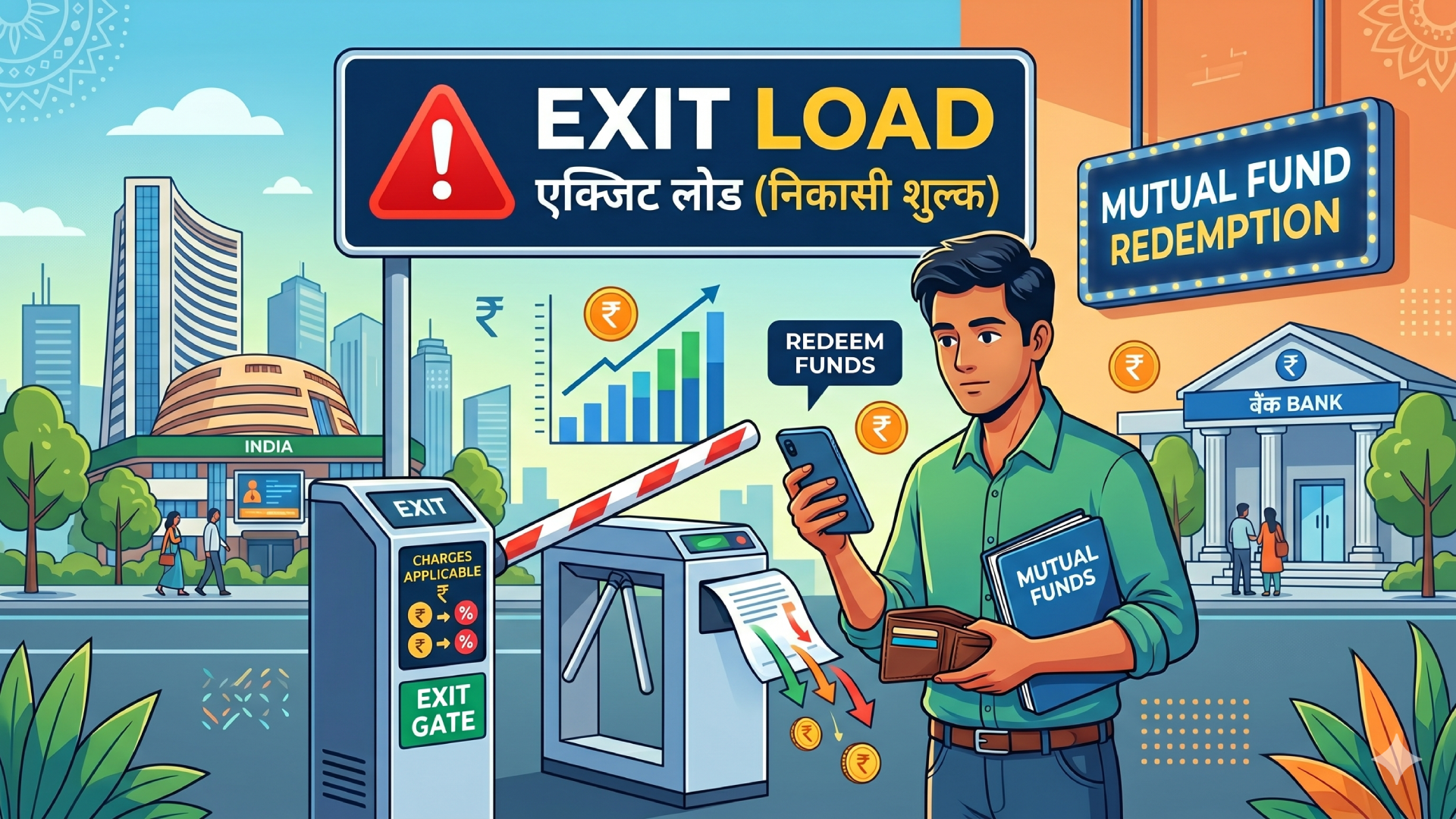
Mutual funds have become one of the most popular investment options in India. Whether you’re a beginner or a seasoned investor, you’ve likely come across the term exit load.
This guide explains exit load in mutual funds in a simple, practical, and honest way. You’ll learn what it is, why it exists, how it impacts your money, and how to avoid unnecessary charges.
What is Exit Load in Mutual Funds?
Exit load is a fee charged by a mutual fund when you redeem (sell) your units before a specified time period.
In simple terms:
If you invest and withdraw too early, the fund charges a penalty.
This fee is usually expressed as a percentage of your investment value.
Example:
- You invest ₹1,00,000 in a mutual fund
- Exit load: 1% if redeemed within 1 year
- You withdraw within 1 year
You pay: ₹1,000 as exit load
You receive: ₹99,000 (excluding market gains/losses)
Why Do Mutual Funds Charge Exit Load?
Exit load is not just a random charge. It serves a clear purpose.
1. Discourage Short-Term Trading
Mutual funds are designed for long-term investing. Frequent buying and selling can disrupt fund management.
2. Protects Long-Term Investors
When investors exit quickly, fund managers may need to sell assets. This affects the overall portfolio. Exit load helps balance this impact.
3. Covers Transaction Costs
Buying and selling securities involves costs. Exit load helps recover part of these expenses.
Types of Exit Load Structures
Not all exit loads are the same. Fund houses use different structures.
1. Flat Exit Load
A fixed percentage applies if you redeem within a certain period.
Example:
1% if withdrawn within 1 year.
2. Tiered Exit Load
The percentage reduces over time.
Example:
- 1% within 6 months
- 5% between 6–12 months
- 0% after 1 year
3. No Exit Load
Some funds don’t charge any exit load.
Common examples:
- Overnight funds
- Some liquid funds
Exit Load vs Expense Ratio: Don't Confuse Them
Many investors mix up these two terms. Let's clarify.
Key takeaway:
Exit load is a one-time fee. Expense ratio is ongoing.
How Exit Load Affects Your Returns
Exit load may look small, but it can impact your returns—especially in short-term investments.
Scenario:
- Investment: ₹2,00,000
- Return: 8% in 6 months
- Exit load: 1%
Without exit load:
₹2,16,000
With exit load:
₹2,16,000 – ₹2,000 = ₹2,14,000
You lose ₹2,000 instantly.
When is Exit Load Charged?
Exit load applies when you:
- Redeem your mutual fund units
- Switch from one scheme to another within the same fund house
- Withdraw from Systematic Withdrawal Plan (SWP) early
Important:
Each SIP installment is treated as a separate investment.
So, exit load applies individually.
Exit Load in SIP Investments
This is where many Indian investors get confused.
Example:
You invest ₹5,000 monthly via SIP.
- January SIP → completes 1 year in next January
- February SIP → completes 1 year in next February
If you redeem in December:
- January SIP → no exit load
- February to November SIPs → exit load applies
Conclusion:
Exit load depends on each installment’s holding period.
Exit Load and Taxation: What You Should Know
Exit load and taxes are different.
Exit Load:
- Charged by mutual fund
- Deducted before payout
Tax:
- Paid to the government
- Based on capital gains
Example:
If you redeem early:
- Exit load reduces your amount
- Tax applies on remaining gains
How to Avoid Exit Load in Mutual Funds
You don’t need complicated strategies. Just follow these practical steps:
1. Invest with a Time Horizon
Match your investment with your goals.
- Short-term goals → Avoid funds with exit load
- Long-term goals → Equity funds work well
2. Check Exit Load Before Investing
Always read:
- Scheme Information Document (SID)
- Key Information Memorandum (KIM)
3. Avoid Panic Selling
Market fluctuations are normal. Exiting early often triggers exit load and losses.
4. Use Liquid Funds for Short-Term Needs
If you may need money soon, choose:
- Liquid funds
- Overnight funds
These usually have minimal or no exit load.
5. Plan SIP Withdrawals Smartly
Withdraw older units first to minimize exit load impact.
Common Myths About Exit Load
Let’s bust a few myths.
Myth 1: Exit Load Applies to All Funds
Reality: Many funds have zero exit load.
Myth 2: Exit Load is a Tax
Reality: It’s a fee, not a tax.
Myth 3: Exit Load is Always High
Reality: Most funds charge around 1% or less.
Myth 4: SIP Investments Avoid Exit Load
Reality: Exit load still applies to each installment.
Exit Load vs Lock-in Period
These two concepts often confuse investors.
Exit Load:
- Optional exit with penalty
- Applies for a limited time
Lock-in Period:
- No exit allowed
- Example: ELSS (3 years)
Key difference:
Exit load allows exit with cost; lock-in restricts exit completely.
What Do SEBI Guidelines Say?
The Securities and Exchange Board of India (SEBI) regulates mutual funds.
Key rules:
- Exit load must be clearly disclosed
- Fund houses cannot misuse exit load
- Investors must receive transparent information
This ensures fairness and investor protection.
When Should You Ignore Exit Load?
Yes, sometimes you can ignore it.
1. Emergency Situations
Your financial needs matter more than a small fee.
2. Poor Fund Performance
If a fund consistently underperforms, exiting early may be wise.
3. Portfolio Rebalancing
Adjusting your portfolio can justify exit load costs.
Frequently Asked Questions
Final Thoughts
Exit load in mutual funds may seem like a small detail, but it plays a big role in your investment journey.-
Here’s the bottom line:
- It discourages short-term investing
- It protects long-term investors
- It can reduce your returns if ignored
The solution is simple:
Plan your investments, stay disciplined, and understand the rules before you invest.
If you respect the holding period, exit load becomes irrelevant. But if you ignore it, even a small percentage can quietly reduce your profits.
If you want to plan your investments smartly an AMFI Registered Mutual Fund Distributor, Kirit Nagda can help you. He has ove 24+ years of experience in Mutual Fund industry managing over 100+ crores of investments. Contact him at +91-9820818367.